Poland
Things to do in Warsaw
52 places52 stories6 routes
Sightlore has 52 places to explore in Warsaw, and 52 of them come with a 60-second story in 5 languages. Point your camera at a landmark to learn its name and story, and earn points and badges at the places you actually visit.
Warsaw's must-sees
The city's most important places. In the app you see how many you've visited and earn a badge when you've seen them all.
- 1

National Museum in Warsaw
The National Museum in Warsaw is a national art museum located in Warsaw and one of the largest museums in Poland.
- 2

Łazienki Palace
The Palace on the Isle, also known as the Baths Palace, is a classicist palace in Warsaw's Royal Baths Park, the city's largest park, occupying over 76 hectares of the city center.
- 3

Warsaw Old Town
Warsaw Old Town, also known as Old Town, and historically known as Old Warsaw, is a neighbourhood, and an area of the City Information System, in the city of Warsaw, Poland, located within the district of Śródmieście.
- 4

Museum of the History of Polish Jews
POLIN Museum of the History of Polish Jews is a museum dedicated to preserving and recalling the memory of the history of Jews in Poland. The museum is located on the site of the former Warsaw Ghetto.
- 5

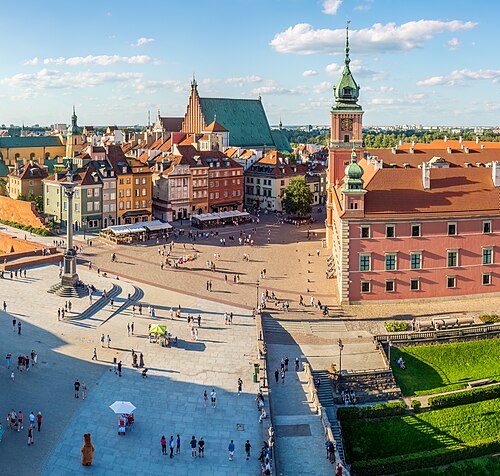
Royal Castle in Warsaw
The Royal Castle in Warsaw is a state museum and a national historical monument, which formerly served as the official royal residence of several Polish monarchs.
- 6

Miła 18
The Anielewicz Bunker, also known as the Anielewicz Mound, was the headquarters and hidden shelter of the Jewish Combat Organization (ŻOB), a Jewish resistance group in the Warsaw Ghetto in Poland during the Nazi German occupation of World War II.
- 7

Palace Museum in Wilanów
The King John III Museum in Wilanów is a museum in Warsaw, Poland considered to be one of the oldest in the country and the repository of the country's royal and artistic heritage.
- 8

Presidential Palace
The Presidential Palace is the official residence of the Polish head of state and president alongside the Belweder Palace, located in Warsaw, Poland.
- 9

Umschlagplatz in Warsaw ghetto
Umschlagplatz was the term used during The Holocaust to denote the holding areas adjacent to railway stations in occupied Poland where Jews from ghettos were assembled for deportation to Nazi death camps.
- 10

Museum of Modern Art in Warsaw
The Museum of Modern Art in Warsaw, also known as MSN Warsaw, is a modern and contemporary art museum in Warsaw, Poland. The museum was founded in 2005 and the director of the museum since June 6, 2007 has been Joanna Mytkowska.
Discovery routes in Warsaw
Visit the stops in any order and tap "Check in" at each one; finish the route to earn points and its own badge.
Warsaw: the Old Town and Royal Castle
The Old Town, faithfully rebuilt after the war: Castle Square and Sigismund's Column, the Royal Castle, the cathedral, the Market Square and the Mermaid, the Barbican, and in the New Town the Curie Museum and the fountain park.
Warsaw: the Royal Route
From St Anne's Church along Krakowskie Przedmieście and Nowy Świat: Mariensztat, the Presidential Palace, Holy Cross Church where Chopin's heart is kept, the Copernicus Monument, the university and the Chopin Museum.
Warsaw: the Saxon Garden and Palace of Culture
From the Grand Theatre to the Tomb of the Unknown Soldier and the Saxon Garden, from the Zachęta gallery to the Palace of Culture and Science, then the National Museum and the Copernicus Science Centre on the Vistula.
Warsaw: the Ghetto and the Uprisings
From the Warsaw Uprising Monument into the former ghetto: the POLIN Museum, the Ghetto Heroes Monument, the Anielewicz Bunker, Umschlagplatz, the Jewish and Powązki cemeteries and the Warsaw Rising Museum.
Warsaw: the Royal Łazienki Park
From Ujazdów Castle into Łazienki Park: the Chopin Monument, the Belweder Palace and the Palace on the Isle.
Around Warsaw: Wilanów, the Citadel and the Zoo
By car: King John III Sobieski's Baroque palace at Wilanów, the nineteenth-century Warsaw Citadel and the zoo across the Vistula.
Places to visit
Historic sites

Castle Square
Castle Square is a historic square in front of the Royal Castle – the former official residence of Polish monarchs – located in Warsaw, Poland. It is a popular meeting place for tourists and locals.
Warsaw Old Town
Warsaw Old Town, also known as Old Town, and historically known as Old Warsaw, is a neighbourhood, and an area of the City Information System, in the city of Warsaw, Poland, located within the district of Śródmieście.

Old Town Market Square in Warsaw
Old Town Market Square is the center and oldest part of the Old Town of Warsaw, Poland. Immediately after the Warsaw Uprising, it was systematically blown up by the Wehrmacht.

Warsaw Barbican
The Warsaw Barbican is a barbican (semicircular fortified outpost) in Warsaw, Poland, and one of few remaining relics of the complex network of historic fortifications that once encircled Warsaw.

Krakowskie Przedmieście Street
Krakowskie Przedmieście (Polish) is one of the best known streets of Poland's capital Warsaw, surrounded by historic palaces, churches and manor-houses.

University of Warsaw
The University of Warsaw is a public research university in Warsaw, Poland.

Nowy Świat Street
Nowy Świat, known in English as New World Street, is one of the main historic thoroughfares of Warsaw, Poland.

Okopowa Street Jewish Cemetery
The Warsaw Jewish Cemetery is one of the largest Jewish cemeteries in Europe and in the world.

Powązki Cemetery
Powązki Cemetery, also known as Stare Powązki, is a historic necropolis located in Wola district, in the western part of Warsaw, Poland.

Ujazdów Castle
Ujazdów Castle is a castle in the historic Ujazdów district, between Ujazdów Park (Park Ujazdowski) and the Royal Baths Park (Łazienki Królewskie), in Warsaw, Poland.
Palace Museum in Wilanów
The King John III Museum in Wilanów is a museum in Warsaw, Poland considered to be one of the oldest in the country and the repository of the country's royal and artistic heritage.

Warsaw Citadel
Warsaw Citadel is a 19th-century fortress in Warsaw, Poland. It was built by order of Tsar Nicholas I after the suppression of the 1830 November Uprising in order to bolster imperial Russian control of the city.
Museums
Royal Castle in Warsaw
The Royal Castle in Warsaw is a state museum and a national historical monument, which formerly served as the official royal residence of several Polish monarchs.

Museum of Warsaw
Museum of Warsaw is a museum in the Old Town Market Place in Warsaw, Poland.

Maria Skłodowska-Curie Museum
The Maria Skłodowska-Curie Museum is a museum in Warsaw, Poland, devoted to the life and work of Polish double Nobel laureate Maria Skłodowska-Curie, who discovered the chemical elements polonium and radium.

Fryderyk Chopin Museum
The Fryderyk Chopin Museum is a museum in Warsaw, Poland, established in 1954 and dedicated to Polish composer Frédéric Chopin. Since 2005, the museum has been operated by the Fryderyk Chopin Institute.

Zachęta
The Zachęta – National Gallery of Art is a contemporary art museum in the center of Warsaw, Poland. The Gallery's chief purpose is to present and support Polish contemporary art and artists.
Museum of Modern Art in Warsaw
The Museum of Modern Art in Warsaw, also known as MSN Warsaw, is a modern and contemporary art museum in Warsaw, Poland. The museum was founded in 2005 and the director of the museum since June 6, 2007 has been Joanna Mytkowska.
National Museum in Warsaw
The National Museum in Warsaw is a national art museum located in Warsaw and one of the largest museums in Poland.

Copernicus Science Centre
Copernicus Science Centre is a science museum standing on the bank of the Vistula River in Warsaw, Poland.
Museum of the History of Polish Jews
POLIN Museum of the History of Polish Jews is a museum dedicated to preserving and recalling the memory of the history of Jews in Poland. The museum is located on the site of the former Warsaw Ghetto.

Warsaw Uprising Museum
The Warsaw Rising Museum, in the Wola district of Warsaw, Poland, is dedicated to the Warsaw Uprising of 1944. The institution of the museum was established in 1983, but no construction work took place for many years.
Łazienki Palace
The Palace on the Isle, also known as the Baths Palace, is a classicist palace in Warsaw's Royal Baths Park, the city's largest park, occupying over 76 hectares of the city center.
Places of worship

St. John's Archcathedral
St John's Archcathedral is a Catholic church within the Old Town precinct in Warsaw, Poland. The Brick Gothic structure stands on Świętojańska Street, adjacent to the Jesuit Church.

Jesuit Church
The Jesuit Church, also known as Church of the Gracious Mother of God (Kościół Matki Bożej Łaskawej), is an ornate church within the Old Town precinct in Warsaw, Poland.

St. Kazimierz Church
St. Casimir Church is a Roman Catholic church in Warsaw's New Town at New Town Market Square.

St. Anne's Church
St. Anne's Church is a Roman Catholic church in the historic center of Warsaw, Poland, adjacent to the Castle Square, at Krakowskie Przedmieście 68.

Carmelite Church
Church of the Assumption of the Virgin Mary and of St. Joseph, commonly known as the Carmelite Church, is a Roman Catholic church at Krakowskie Przedmieście 52/54 in Warsaw, Poland.

Visitationist Church
Church of St. Joseph of the Visitationists commonly known as the Visitationist Church is a Roman Catholic church in Warsaw, Poland, situated at Krakowskie Przedmieście 34.

Holy Cross Church
The Church of the Holy Cross is a Roman Catholic church in central Warsaw, Poland. It is located on Krakowskie Przedmieście, opposite the main Warsaw University campus.
Monuments

Sigismund's Column
Sigismund's Column, originally erected in 1644, is located at Castle Square, Warsaw, Poland and is one of Warsaw's most famous landmarks as well as the first secular monument in the form of a column in modern history.

Copper-Roof Palace
The Copper-Roof Palace is an 18th-century palace in Warsaw, Poland. It takes its name (which is less precisely phrased in the original Polish) from the copper roof, a rarity in the first half of the 18th century.

Mermaid monument
The Mermaid Monument is a zinc sculpture placed at the Old Town Market Place in Warsaw, Poland.

Mariensztat
Mariensztat is a historic neighbourhood along the Vistula river in central Warsaw, the capital of Poland.

Adam Mickiewicz Monument, Warsaw
The statue of Adam Mickiewicz is a monument dedicated to Adam Mickiewicz at the Krakowskie Przedmieście in the Śródmieście district of Warsaw, Poland. The Neo-Classicist monument was constructed in 1897–1898 by sculptor Cyprian Godebski.
Presidential Palace
The Presidential Palace is the official residence of the Polish head of state and president alongside the Belweder Palace, located in Warsaw, Poland.

Monument to Prince Józef Poniatowski in Warsaw
The Prince Józef Poniatowski Monument in Warsaw is a monument currently located at 46/48 Krakowskie Przedmieście in the courtyard of the Presidential Palace.

Nicolaus Copernicus Monument in Warsaw
The Nicolaus Copernicus Monument in Warsaw is one of the Polish capital's notable landmarks. It stands before the Staszic Palace, the seat of the Polish Academy of Sciences on Krakowskie Przedmieście.

Grand Theatre
The Grand Theatre, Warsaw, or the Great Theatre—National Opera, is a theatre and opera complex situated on the historic Theatre Square in central Warsaw, Poland.

Tomb of the Unknown Soldier, Warsaw
The Tomb of the Unknown Soldier is a monument in Warsaw, Poland, dedicated to the unknown soldiers who have given their lives for Poland.

Palace of Culture and Science
The Palace of Culture and Science is a notable high-rise building in central Warsaw, Poland.

Warsaw Uprising Monument
Warsaw Uprising Monument is a monument in Warsaw, Poland, dedicated to the Warsaw Uprising of 1944. Unveiled in 1989, it was designed by Jacek Budyn and sculpted by Wincenty Kućma. It is located on the southern side of Krasiński Square.

Krasiński Palace
The Krasiński Palace, also known as the Palace of the Commonwealth, is a reconstructed Baroque palace in Warsaw, Poland, on Krasiński Square (Plac Krasińskich).

Monument to the Ghetto Heroes
The Monument to the Ghetto Heroes is a monument in Warsaw, Poland, commemorating the Warsaw Ghetto Uprising of 1943 during the Second World War.
Miła 18
The Anielewicz Bunker, also known as the Anielewicz Mound, was the headquarters and hidden shelter of the Jewish Combat Organization (ŻOB), a Jewish resistance group in the Warsaw Ghetto in Poland during the Nazi German occupation of World War II.
Umschlagplatz in Warsaw ghetto
Umschlagplatz was the term used during The Holocaust to denote the holding areas adjacent to railway stations in occupied Poland where Jews from ghettos were assembled for deportation to Nazi death camps.

Frederic Chopin Monument in Warsaw
The statue of Frédéric Chopin is a large bronze statue of Frédéric Chopin, designed by Wacław Szymanowski, that stands in the upper part of Warsaw's Royal Baths Park (also known as Łazienki Park), adjacent to Aleje Ujazdowskie (Ujazdów Avenue).

Belweder
Belweder is a neoclassical palace in Warsaw, Poland. Erected in 1660 and remodelled in the early 1800s, it is one of several official residences used by Polish presidents as well as a state guest house for visiting heads of state.
Nature

Multimedia Fountain Park at Podzamcze
Park with four fountains below the New Town, with light and music shows on summer evenings.

Saxon Garden
The Saxon Garden is a 15.5–hectare public garden in central (Śródmieście) Warsaw, Poland, facing Piłsudski Square. It is the oldest public park in the city.
Łazienki Park
Łazienki Park, or the Royal Baths Park, is the largest park in Warsaw, Poland, occupying 76 hectares of the city center.

Warsaw Zoo
The Antonina and Jan Żabiński Municipal Zoological Garden, known simply as the Warsaw Zoo, is a scientific zoo located alongside the Vistula River in Warsaw, Poland.
Explore Warsaw with your camera
Hear the stories on the spot, complete routes, collect badges. Sightlore is coming soon to the App Store.